property
Planning Overhaul Reshaping Newcastle's Property Market as Rezoning Decisions Stack Up
From the Hunter Street corridor to Mayfield's industrial fringe, a wave of policy decisions is redrawing where Newcastle's next generation of housing gets built, and who can afford it.
How we reported this
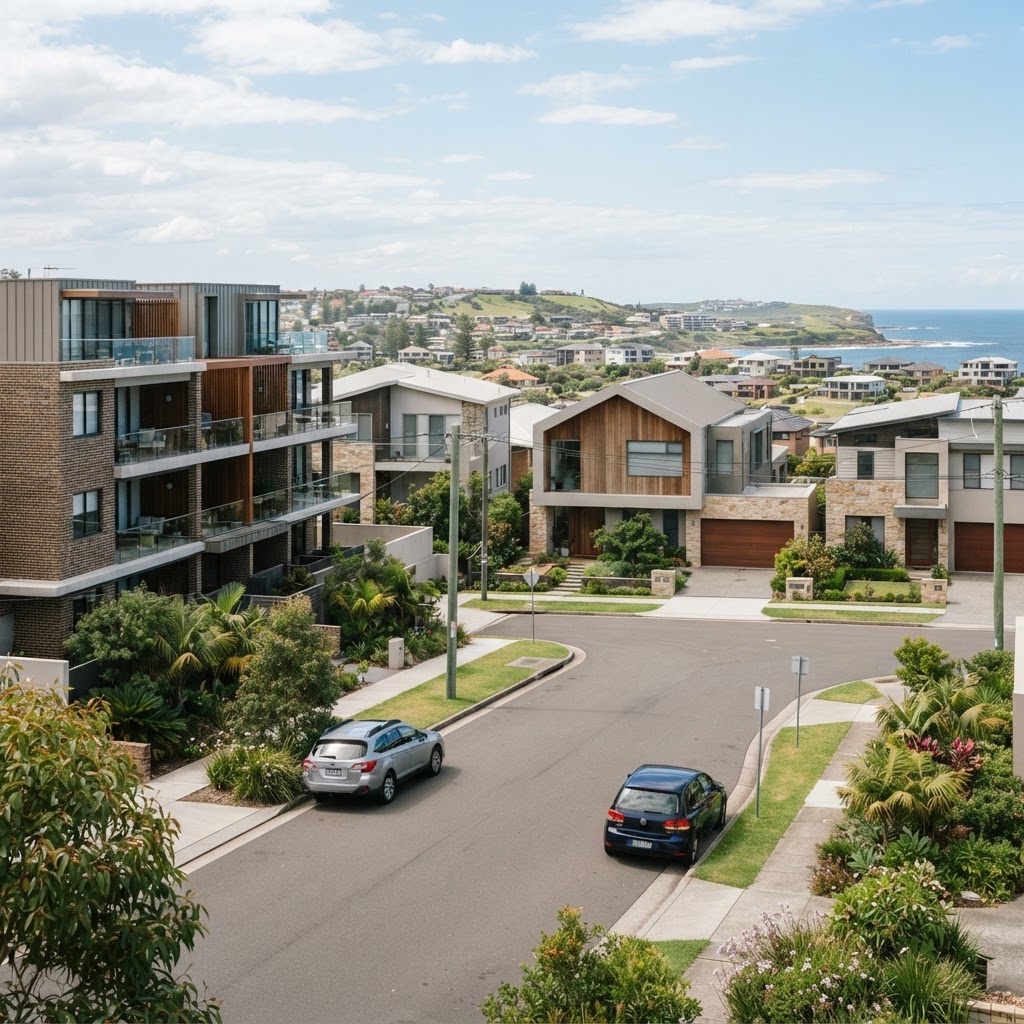
Newcastle City Council has moved to fast-track rezoning assessments across several inner-ring suburbs, and the property market is already pricing in the change. Land parcels within 800 metres of the Hunter Street light rail corridor, particularly around the Wickham and Hamilton stops, have drawn renewed developer interest in the first half of 2026, with agents reporting inquiry volumes not seen since the post-COVID 2021 surge.
The timing matters. New South Wales is operating under the Minns government's Transport Oriented Development (TOD) program, which mandates higher-density zoning within walking distance of key rail and transit stops. Newcastle's inclusion in the expanded TOD framework, confirmed in late 2025, gives developers a policy tailwind that changes the calculus on sites that sat unloved for years. Landowners who bought low expecting long rezoning battles are suddenly looking at a much shorter path to approval.
Islington and Mayfield in the Crosshairs
Two suburbs are drawing the most attention from buyers, investors and planners right now: Islington and Mayfield. Both sit on the inner-western edge of Newcastle's established residential belt, and both carry significant pockets of older industrial and mixed-use land that councils and state planners have been eyeing for residential conversion.
In Mayfield, the former industrial corridor along Maitland Road has been the subject of planning studies since at least 2023. With the TOD framework now active, several sites between Hanbury Street and Morehead Street are understood to be under active development assessment. These aren't small infill plays, some lots exceed 3,000 square metres and carry potential for five-to-eight storey apartment blocks if infrastructure contributions can be resolved with Hunter Water and Ausgrid.
Islington, meanwhile, has seen a sharp lift in land inquiries near its borders with Carrington Road and the Broadmeadow employment precinct. The suburb's proximity to the John Hunter Hospital employment zone and the emerging Broadmeadow Sports and Entertainment Precinct has made it a target for build-to-rent proponents testing the Newcastle market for the first time.
The port precinct transformation adds another layer. The Newcastle Port land at Throsby has been part of long-running negotiations between the NSW Government, the Hunter Ports Authority and City of Newcastle over mixed-use activation. Any rezoning outcome there, even a partial one, would release significant waterfront acreage into a market that has almost no comparable stock.
What the Numbers Say
NSW's broader median sits around $720,000, but Newcastle's inner suburbs are running well above that baseline. Properties within the Hamilton, Islington and Mayfield triangle have been transacting in the $850,000 to $1.1 million range for standard three-bedroom homes through the first two quarters of 2026. Land-only lots with rezoning potential in Mayfield have attracted offers 20 to 30 per cent above 2024 levels, according to listings activity tracked through the first half of this year.
Melbourne's auction market hitting its weakest winter start on record is worth noting as a comparison point, it underscores just how differently Newcastle is behaving. Sydney overflow buyers, priced out of the inner west and lower north shore, are still arriving in the Hunter at a steady clip, and they're not particularly deterred by a rate environment that has paralysed Melbourne vendors.
Generation Z buyers, who make up a growing share of first-home applications through the NSW First Home Buyer Assistance Scheme, are watching the rezoning outcomes closely. If higher-density sites get approved and actually built out, apartment supply in Newcastle's middle ring could grow meaningfully by 2028, the first real test of whether new planning settings translate into dwelling numbers on the ground.
For buyers and sellers, the practical reality is this: properties sitting near confirmed TOD nodes or within suburbs flagged for rezoning reviews should be assessed with a planning lawyer or town planner before any transaction, not after. Zoning changes lift land value but also introduce risk around approval timelines, infrastructure levies and potential heritage overlays. The Newcastle Development Control Plan remains the key document, and it is being reviewed. Watching what City of Newcastle does with that review in the second half of 2026 will tell buyers more about where this market heads than any auction clearance rate.
This article is general information only and is not personal financial or investment advice. Consider your own circumstances and seek licensed professional advice before making financial decisions.