property
Is Renting Actually Cheaper Than Buying Right Now?
For Newcastle households doing the sums in mid-2026, the answer is more complicated, and more consequential, than it used to be.
How we reported this
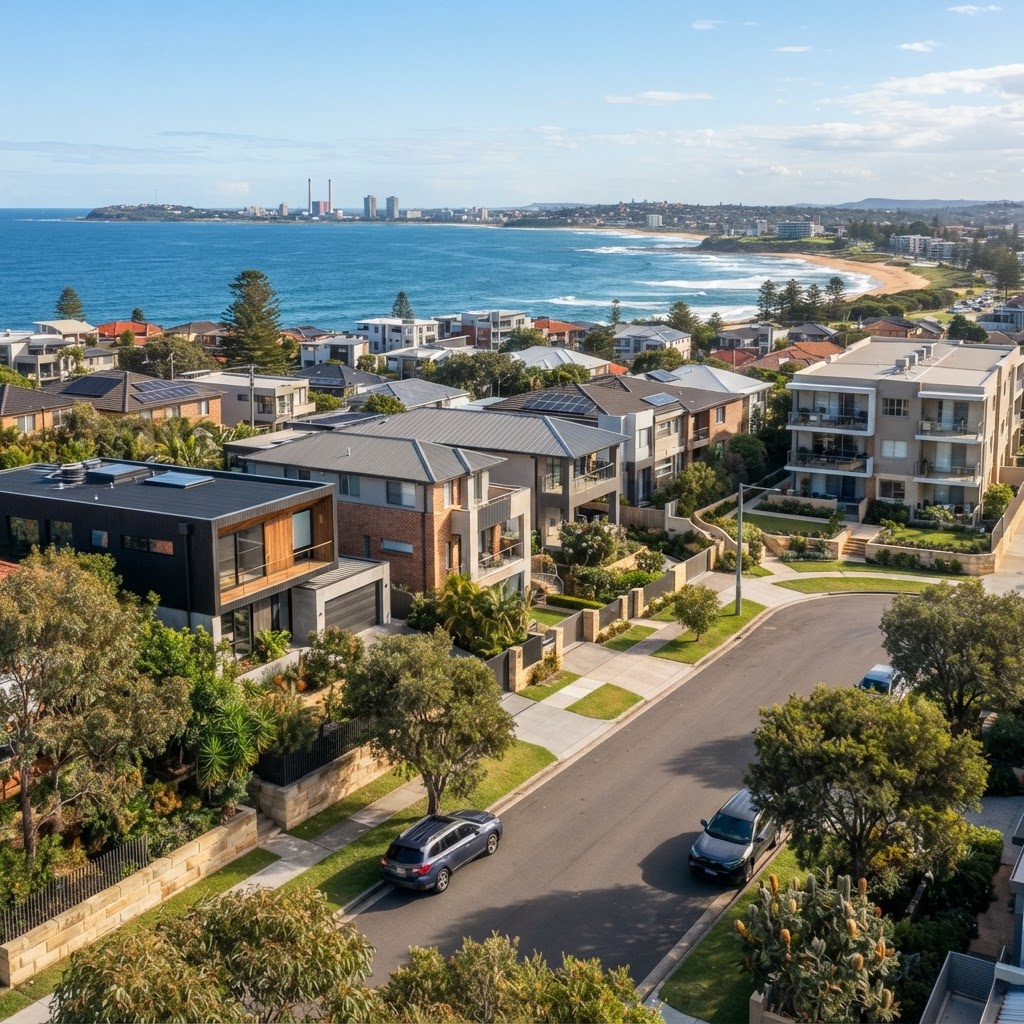
Run the numbers on a typical three-bedroom house in Mayfield and renting comes out ahead on monthly cash flow, but only just, and only if you ignore what happens to your wealth over the next decade. That tension is sitting at the centre of every kitchen-table conversation in Newcastle's middle ring suburbs right now, as mortgage rates stay elevated and rents refuse to ease.
The arithmetic matters more than usual because NSW's median house price is sitting around $720,000, and Newcastle is no longer the affordable alternative it was five years ago. Sydney workers who relocated to the Hunter during the remote-work boom pushed local values sharply upward, and the pipeline of new supply across the Islington and Mayfield renewal corridors has not kept pace with demand. First-home buyers who paused in 2023 hoping for a correction are still pausing.
What the Monthly Numbers Actually Look Like
A buyer purchasing a $720,000 Newcastle home with a 20 percent deposit, $144,000, and a standard variable rate around 6.3 percent is looking at monthly repayments of roughly $3,560. Stack rates, insurance and council rates on top and the true holding cost clears $4,000 a month easily. The same three-bedroom house in Mayfield or Hamilton North is currently advertising on the rental market for somewhere between $2,400 and $2,700 a month. On pure cash flow, renting wins by $1,300 to $1,600 every single month.
That gap is real, and it is why organisations such as the Hunter Community Housing Network and advice services operating out of the Newcastle CBD have reported a rise in clients who are deliberately choosing to remain renters and redirect the difference into investment accounts or superannuation. The logic is defensible. Invest $1,500 a month at a conservative return and over ten years you are building a meaningful asset base without the transaction costs, the stamp duty, or the risk of a variable-rate shock.
The counterargument is just as concrete. Renters in suburbs like Jesmond and Broadmeadow have absorbed rent increases of between 20 and 30 percent since 2021, according to figures regularly cited by tenant advocacy bodies in NSW. A renter banking on stable outgoings is betting on a landlord who may never raise the rent, a bet that has not paid off reliably anywhere in the Hunter over the past four years. Security of tenure in the private rental market in NSW remains limited, and a lease termination can erase months of carefully banked savings in a matter of weeks if it forces a move to a more expensive property.
The Local Variables That Change the Equation
Geography shifts the calculus significantly within Newcastle itself. The port precinct transformation along Honeysuckle Drive has pushed unit prices in that corridor above $650,000 for a two-bedroom apartment, making rent-versus-buy comparisons there look even more lopsided than in the middle suburbs. But outer suburbs, Sandgate, Beresfield, parts of Cessnock within commuting range, still have entry-level detached housing priced below $600,000, which tightens the monthly gap considerably and brings buyer costs closer to rental equivalents.
First-home buyers eligible for the NSW First Home Buyers Assistance Scheme, which provides stamp duty exemptions on purchases up to $800,000, get a one-time saving of between $25,000 and $31,000 depending on the price paid. That is real money that improves the buy case, but it is a one-off benefit, not a recurring offset to higher mortgage repayments.
The practical reality for anyone deciding in July 2026 is that renting is cheaper month to month, buying is better for long-term wealth accumulation if prices continue to rise, and the decision hinges almost entirely on two things: how long you plan to stay in Newcastle, and how confident you are that your rental situation will remain stable. Anyone within five years of wanting to upsize or relocate is probably better off renting. Anyone planning to put down roots in suburbs like Lambton, Merewether or Cardiff for a decade or more should be taking buy-side maths very seriously, even if the first few years hurt.
The one thing that has not changed: waiting for a perfect entry point in this market has a poor track record.
This article is general information only and is not personal financial or investment advice. Consider your own circumstances and seek licensed professional advice before making financial decisions.